
Fever, cough, and vomiting… are these flu symptoms or a stomach bug? Be careful, dear reader, as it could be lymphoma, also known as cancer of the lymphatic system.
The following lines contain an important alert for anyone who neglects their health or feels too lazy to visit a doctor for a check-up. The symptoms of this disease may seem mild, but its complications can be deadly!
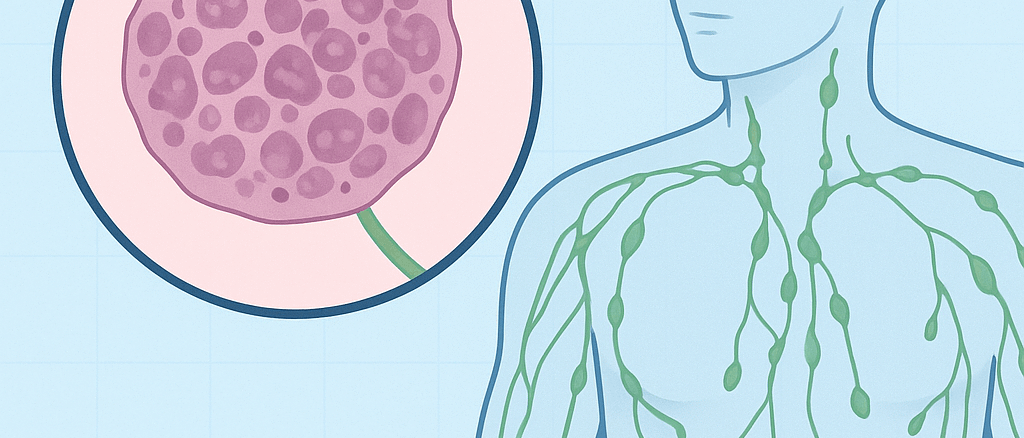
Dr. Mohamed Salama Mohamed (Professor of Surgical Oncology and General Surgery – National Cancer Institute) starts by explaining the lymph nodes. He defines them as lymphatic glands that are part of the body’s immune system. They are spread throughout the body so that if the body is exposed to any pathogens, they act as the first line of defense, preventing the infection from spreading to other parts of the body. They serve as an immune barrier for protection.
Lymph nodes are generally located throughout the body, such as the neck, underarms, elbows, abdomen, around the trachea, and pelvic area. They are responsible for the immune defense of the surrounding region.
Symptoms of the disease include a feeling of fever, especially in the evening. In advanced stages, the patient may experience vomiting and coughing, general weakness, sweating even in cold weather, weight loss, and noticeable swelling in certain areas such as under the arms or in the neck.
If the lymphoma occurs in less visible areas such as the chest or abdomen, the patient may suffer from coughing or stomach pain.
Regarding the causes, Dr. Mohamed Ali confirms that no specific cause for lymphoma has been identified yet. Dr. Hala Aziz (Professor of Oncology – National Cancer Institute) agrees but clarifies that some factors may increase the risk, including:
- Weakened immune system, such as in HIV/AIDS cases.
- Occurrence after organ transplant surgeries.
- Certain autoimmune diseases, such as rheumatoid arthritis, lupus, or hepatitis.
- Genetic factors.
- Exposure to some chemicals, such as pesticides.
- Recurrence in lymph nodes due to previous chemotherapy treatments for other cancers.
Diagnosis is carried out by a surgical doctor, initially based on observing the symptoms, followed by medical tests, with the most important being CT scans of the neck, chest, abdomen, and pelvis.
The most crucial step is obtaining a tissue sample, either by needle biopsy or by surgical removal of the entire gland for analysis. This determines whether it is truly lymphoma and identifies the type and grade.
Dr. Hala explains that there are two main types of lymphoma:
- Non-Hodgkin Lymphoma: Usually treated with chemotherapy. In some cases, radiation therapy may be needed. Immunotherapy may also be considered, though not very intensively. Certain cases may require targeted therapy.
- Hodgkin Lymphoma: Generally treated only with chemotherapy, which often has a strong response.
The chances of recovery depend on the stage of the disease, with higher recovery rates in the early stages (stages I and II).
Surgery is not a primary treatment but plays a crucial role in diagnosis, to obtain a tissue sample and determine the disease type to guide treatment. Unlike many cancers, where surgery is used to remove tumors and prevent recurrence, in lymphomas, chemotherapy is preferred. Surgical removal of affected nodes may lead to relapse.
Early examination and treatment are vital for eliminating the disease. If neglected, complications can increase and may become life-threatening.
Since there is no specific known cause, both doctors emphasize the importance of regular and early check-ups with tests every six months to one year. No symptoms, however mild, should be ignored, and one must immediately consult a specialist.
They also mention PET-CT scans, which are full-body scans combining CT and nuclear imaging to detect hidden diseases and tumors in the body.
Leave feedback about this